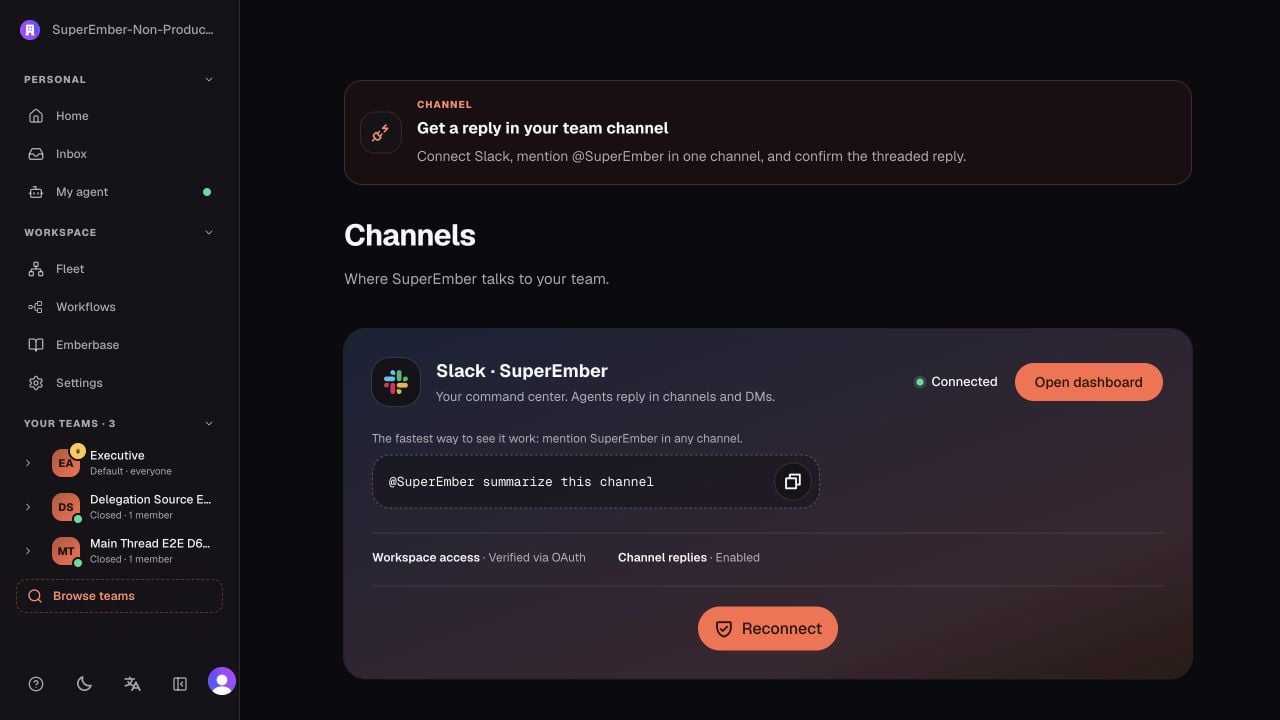
A channel is not only a notification destination. It is a work surface where people provide context, delegate tasks, answer questions, approve actions, and receive results. Connect a Slack channel

Do this

Open this mission from Help & onboarding and choose Show me. The walkthrough highlights the real Slack authorization control—or, if Slack is already connected, the starter prompt to copy and try.
  1. Open Connect from the onboarding mission.
  2. Choose Slack and authorize the intended workspace.
  3. Add SuperEmber to a channel where the first task already has useful context.
  4. Mention @SuperEmber with one narrow request.
  5. Confirm the reply appears in the same thread.

Understand routing

SuperEmber resolves the channel binding before starting work:
  • A channel assigned to a Team Agent routes work into that team boundary.
  • An unassigned company channel can use the Company AI fallback.
  • Direct messages can route to your Personal Agent when the workspace supports that path.
  • Team membership and agent-access rules still apply; assigning a channel does not bypass them.

Use a Main channel intentionally

A team’s optional Main channel is the operation surface for delegated work. When a Team Agent hands work to a specialist, SuperEmber creates or updates an operation thread there so the team can follow progress and handle a human escalation. Do not assign a noisy social channel as Main. Choose the channel where that team’s operational work should be visible.

You are done when

The checklist marks Connect a channel as done after a linked channel receives a completed inbound turn with a non-empty reply. If it does not advance, verify the app was mentioned correctly and wait for the reply to finish. A blocked, failed, or empty turn does not count. Continue with Set up your Personal Agent.